Problem Gambling In Singapore
Asian gambling has traditionally been restricted to premier destinations such as Macau but the industry is booming in Singapore despite its strict regulations. The rise in the popularity of the gambling industry in Singapore may seem surprising to some, but the stringent rules surrounding the industry have enabled the authorities in the region to capitalize on the large amounts of tourism and revenue the industry can generate.
The gambling industry in Singapore has been growing steadily in recent years as restrictions have been eased. Some will worry now that the pandemic will set the industry back in the region. ©cegoh/Pixabay
Gambling: A Staple of Singaporean Life Gambling addiction is a widespread problem to be sure – in fact, studies show that up to 5.8 per cent of the world’s population struggles with problem gambling. And the problem is especially pronounced in Singapore, where the avenues to gambling are plentiful. The National Council on Problem Gambling operates the National Problem Gambling Helpline Network (1-800-522-4700). The network is a single national access point to local resources for those seeking help for a gambling problem. Gambling addiction is on the rise in Singapore, and it is negatively affecting families across the country. According to the National Addiction Management Service (NAMS) gambling addiction is on the rise in Singapore.
Singapore is renowned worldwide for having tight laws around all facets of public and private life. For example, those living in the city-state are not even allowed to chew gum or use e-cigarettes. If either of these is even found in the possession of a citizen, the will likely receive a substantial fine to dissuade them from doing so.
These laws have also stood in the way of legalized gambling in the country over previous years. The practice was only recently legalized, but the government of the region is now suggesting that its form of tightly regulated gambling is, in fact, safer than the alternative. If the state did not sponsor this pass time, citizens would likely participate in unregulated and illegitimate forms of gambling, which could cause a myriad of issues.
Not only is legalized gambling safer, but it is also a highly valuable industry the authorities can cash in on. By levying taxes on the licensed casinos that are present in Singapore has generated huge amounts in tax revenue for the government. The venues turn over multiple billions each year and the high tax rate has ensured both operators and authorities can profit from the practice.
The History of Gambling in the Region
Singapore is now one of the most successful and lucrative gambling markets in the entirety of Asia, even though the industry was only established in 2008. The regulator in Singapore, the Casino Regulatory Authority, was inaugurated just over 10 years ago which was followed two years later by the casinos that are allowed to operate in the country.
The decision was made to legalize the practice because it was ultimately seen as futile to try to police the illegal gambling industry. Gambling has been a popular pursuit in Singapore for centuries, even though it has been prohibited for much of this time.
The country’s difficult relationship with betting began in the early 19th century when British colonizers banned the operation of underground gambling dens in the region as well as cockfighting. This was all implemented when the British rulers of the region implemented their first regulatory bills in 1820.
These restrictions were built up further in the 1900s when the government implemented a series of bills that were designed to further regulate the practice. These bills included the Private Lotteries Act of 1952 and the Common Gaming House Act of 1961. These outlawed lotteries in the region, as well as the common gaming houses that were widespread across Singapore.
This all changed in 2006 when the first legislation was brought in that began to lift the ban on gambling in the state. The Casino Control Act was passed this year that gave the government the ability to grant special licenses that allowed physical gambling locations to operate legally in Singapore. Such licenses have only been granted to a small number of casinos, but these now rank as some of the largest and most extravagant that exist anywhere in the world.
It is still illegal for anyone in Singapore to place bets on anything anywhere other than these locations. The government maintains that this strict stance is to limit the incidence of illegal and unregulated gambling that occurs in the country.
Problem Gambling In Singapore Latest
The ban on gambling in other locations also extends to the online gambling market. The Remote Gambling Act that was passed in 2014 prohibited online gambling in Singapore unless it is provided by licensed operators. Authorities worry that easy access to online gambling could result in rampant gambling-related problems within the population so decided to heavily regulate the practice.
It does seem as though this bill will be subject to change in the coming months, however. It appears as though the government is planning to more clearly define the rules surrounding the legality of online gambling in Singapore. Currently, a loophole in the legislation means that it is not technically illegal for online casinos to offer services to Singaporeans if the casino is based in another country.

This loophole may be closed in the future, as the authorities are unable to regulate these operators as they work externally to Singapore’s laws and controls.
Whilst the government has made decisions to make gambling licenses inaccessible to most operators that wish to work within the region, the growth of the industry has been undeniable.
Gambling Issues In Singapore
The growth began with the opening of the first casino in Singapore, the Resort World Casino. This location was given the green light to commence business in the state in 2010 despite the laws in the region that typically seek to limit activities of vice. There is seemingly a growing trend for the legalization of pastimes that have traditionally been seen as immoral. First, dancing in bars was allowed by the authorities, then a Grand Prix was given the go-ahead, and now, even gambling is allowed.
Industry Damaged by COVID-19
Despite the huge strides that have been made to regulate and profit of the gambling industry in Singapore, it has not been exempt from the widespread issues that have come about in the wake of the outbreak of COVID-19.
The pandemic forced the closure of casinos and resorts in the state, which has hugely damaged the revenue these businesses have been able to generate. The pandemic has, therefore, jeopardized the position of the market. Many have discussed the Singaporean gambling market as one to challenge the traditional Asian powerhouses such as Macau, or growth markets such as the Philippines.
Recent forecasts have suggested that the overall damage to the market in 2020 as a result of the coronavirus could cause a 65% decline to the overall revenue for the year. Whilst this decline is predicted to be less than what has been seen in Macau or even Las Vegas, it is not expected to recover as quickly as these more established markets.

It is believed by industry experts that the recovery will be impeded by Singapore’s greater distance to its feeder markets that either Macau or Las Vegas. Singapore is more reliant on long-haul international travel to generate much of the revenue from the casinos located within its borders. Currently, the widescale restrictions on travel are disrupting much of the footfall to the region and this is likely to be the case for some time.
Operators in the region, such as Genting Singapore limited have reported significant losses during the period that has been affected by the coronavirus. This operator, stated recently that during the second quarter of 2020, it experienced an SGD163.3 million net loss. This is the rule rather than the exception for the region, as all facets of the gambling industry in Singapore have suffered as a result of lockdown measures. It now remains to be seen whether the industry will be able to bounce back effectively in the wake of the pandemic.
The industry in the typically conservative region has come on leaps and bounds in recent years, but this could all be effectively undone by the fallout from the pandemic. Tourism is gradually returning, and with that, so is footfall to the country’s casinos. The largest casinos in the region are now being re-opened as restrictions are lifted and regulators are hoping that this will create more revenue and taxes from the industry.
Advice from private investigator James Loh:
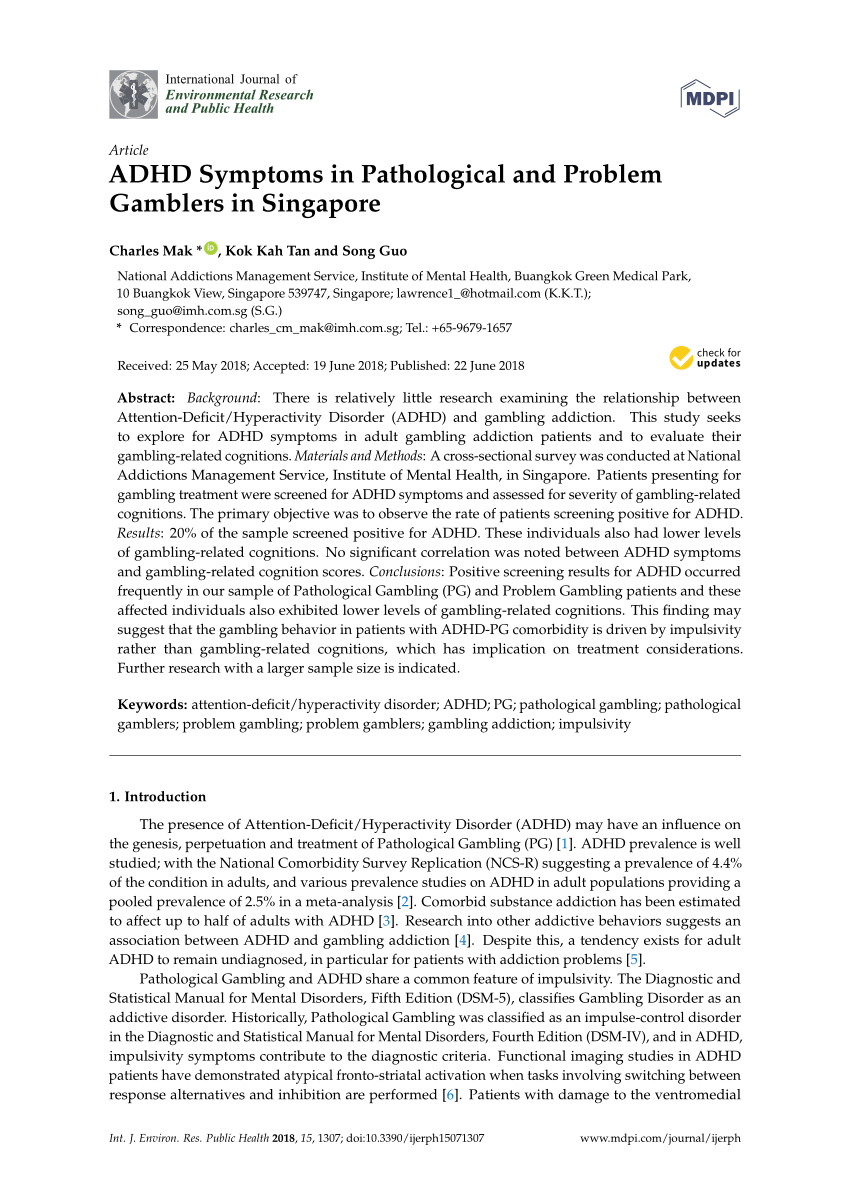
Problem gambling refers to the behaviour of persons who are addicted to gambling. Like any addiction, symptoms can range from the mild to the severe. The most serious form of the gambling is called “Pathological” or “Compulsive” Gambling.
The establishment of the twin integrated resorts and casinos in Singapore has contributed to the cases of problem gambling locally. After all, casino games and casino environments are deliberately designed to induce players to gamble more. Occasionally, people look to private investigators like me to check up on the gambling activities of their family members so they can do something about it.

Identifying the gambling habit
The victims could be our loved ones. It is best to identify problem gambling early on so that something can be done. The following are some tell-tale signs of a gambling habit:
- Lying about the small things: People who have gambling problems generally try to hide such problems from the people around them. They may start lying to their spouses, families, co-workers and friends. They may also hide bills, past-due notices, winnings or losses from partners/family members
- Retirees leaving home for long hours at a stretch: Suspicion should be aroused when these trips are made to venues which host a casino/gambling facility – e.g. country clubs and the integrated resorts. However, the subject may also be unwilling to reveal the nature of their movements when asked. In that case, it may be unwise to press the issue as it could lead to arguments/conflict and cause the subject to become more guarded about his or her activities
- Financial troubles: Constantly not having enough cash for daily expenses and/or having increased debt and/or unpaid bills. This may happen because the gambler is spending more money on gambling than he can afford.
- Mood changes: The subject may become constantly distressed, frustrated and irritable and/or demonstrate less patience when dealing with normal, everyday activities with no overtly identifiable reason
- Borrowing money: Pathological gamblers inevitably find themselves in a financial hole and may resort to borrowing from family, friends, co-workers or even strangers, without always admitting the real reason behind their need for cash. They may also max out their credit cards, sell things for quick cash and/or take out a second mortgage
- Strained relationships and declining work performance/loss of job: Problem gambling causes harm to both the gambler and his or her family. It could lead to increased conflict with friends or family over money or the subject’s gambling habits and/or increasing isolation from family and friends
The above are guidelines to allow you to either confirm or deny your suspicions about whether a relative has a gambling problem. However, they are not meant to be conclusive nor exhaustive and should not be regarded in isolation.
How much gambling is too much?
Should the subject’s gambling habits be known, the following are tell-tale signs that an innocuous habit may be pathological:
- Chasing losses: This happens when gamblers attempt to win back the money they have lost. They may claim that they will quit gambling once they “strike it big” or blame the loss on (lack of) luck or wrong strategies used. However, when they chase their losses, they end up incurring more losses and often land themselves in severe debt
- Increase in betting amounts: Like someone who has drug or alcohol problems, problem gamblers have to up their “dose” of gambling to enjoy it. In other words, they have to bet more and more money to get the kind of rush they want
- Obsession over gambling: When a subject is constantly thinking or talking about gambling, it may be a sign of addiction. The subject may also start to neglect social life and family time in order to spend more money and time on gambling
Actions you can take
Confronting the subject head-on may cause the subject to become defensive and lead to unpleasant arguments. Instead, you can take the following measures, especially if you know that the subject has a weakness for gambling:
- Find the identities of the subject’s gambling partners (if any): They may turn out to be part of an illegal syndicate. If so, it is advisable to report your findings to the relevant authorities.
- Employ a trained Private Investigator to conduct discreet physical surveillance: The PI will be able to conduct surveillance in casinos and provide you with accurate information about the subject’s movements and activities.
- Apply for a Casino Exclusion order (http://www.ncpg.org.sg/en/Pages/DealWithProblemGambling.aspx?category=2)
- Monitor the well-being of the subject: If the subject is facing financial troubles as a result of his/her gambling problem, he/she may become increasingly depressed and may resort to borrowing from illegal moneylenders or even contemplate suicide
- Seek professional help: Encourage the subject to go for counselling services and/or call the National Problem Gambling Helpline 1800-6-668-668 for help and advice
- Take control of finances: Where the problem is severe, guard savings accounts and make them inaccessible to the gambler and/or close all joint checking and savings accounts and create new accounts in your name only.
This article is written by James Loh, managing director of International Investigators Pte Ltd
Gambling Problem Singapore Help
Need a lawyer to assist with your legal matters?

These lawyers are selected based on their number of positive reviews and years of experience in this subject you are enquiring about.
Ok, got itHere are 5 trusted lawyers you can contact directly for a quote.