Nic Slot
Use this option to enable or disable UEFI PXE boot for NIC cards in PCIe slots. Devices listed vary from system to system and can include, for example: Slot 3 NIC Port 1 Boot Slot 3 NIC Port 2 Boot. In case you're wondering, I'm thinking of putting a quad NIC into the mini PCI-E slot of a laptop using a riser.
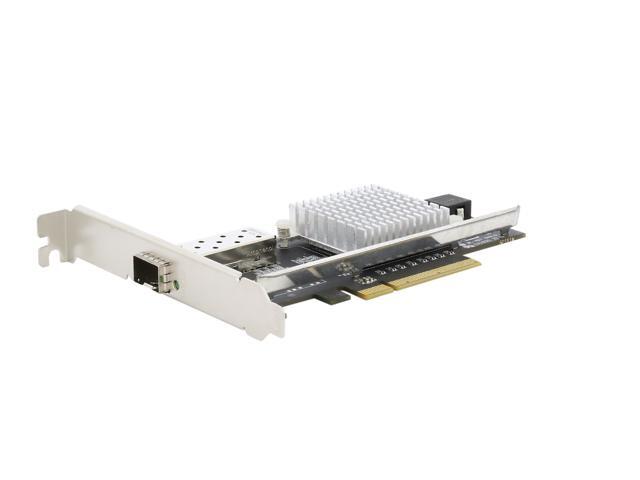
Network Interface Card (NIC) is a hardware unit, which is inbuilt inside a computer provided with a slot, it connects the computer to a computer network for communication with other devices via buses. There are many synonyms for network interface card like, network adapter, local area network (LAN) card or physical network interface card, ethernet controller or ethernet adapter, network controller, and connection card. Network interface card supports almost all standard buses for data transfer between the computers or devices. The connectors or buses act as an intermediator for communication converts the communication between various devices from serial communication to parallel communication or parallel communication to serial communication. It also formats data based on the architecture of the network. This article discusses an overview of What is a wireless network interface card, and its types.
What is a Network Interface Card?
Definition: Network interface card NIC is a hardware component, where network controllers are integrated on to a circuit board that uses standard OSI model of 7 layers to communicate and it acts like a trans-receiver, where it can transmit and receives at the same time while communicating with other devices. Suppose if we want to communicate with another device, let us assume the case of client and server, where the communication between them takes place by firstly sending signals to the physical layer, and then transmitting data packets to the network layer which is an interface at TCP/IP. Connection to the motherboard is made using any one of the following via
- PCI connector
- ISA connector
- ISA connector
- PCI-E
- FireWire
- USB
- Thunderbolt.
The connection to the network is made via any one of the following
- Ethernet
- Token – Ring
Functions of NIC
- It acts like a translator, which converts data into a digital signal.
- Communication can be either by using cable wire or by the router which is wireless over the server network
- To communicate over a long distance a network adapter is used.
Types of Network Interface Cards
There are two types NIC they are,
- Ethernet NIC
- Wireless Network NIC
Nic Sloter
Ethernet NIC
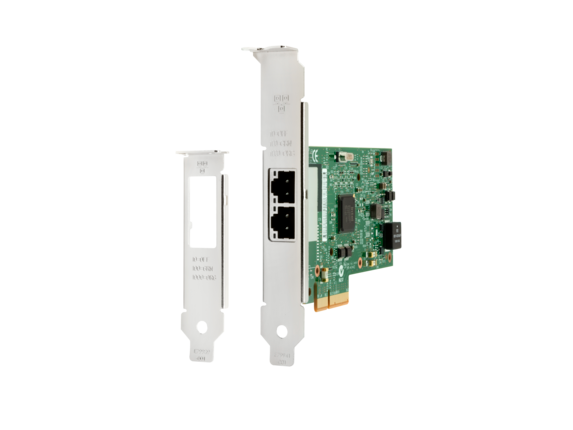
Ethernet NIC card is a slot for a cable where we have to plug one end of the ethernet cable into the slots of the computer and another end of the cable is plugged into the modem, likewise, various devices are connected to make a communication set up between them. There are three standards in Ethernet they are
- 5-Base T: It was developed in 1973, which can transmit, paragraphs using coaxial cable up to a distance 1000mts.
- 10-Base T: It was developed in 1987, it uses twisted cables like telephonic cables for communication.
- 100-Base T: It is also known as fast ethernet, the speed of data transmitted is very high.
- Gigabit Ethernet: It is also named as 1000-Base T ethernet, the special feature of this is it increases the network bandwidth up to 10 times, which can transmit up to 1000mbps of data.
Wireless Network NIC
Wireless network NIC cards consist of a small antenna integrated onto the card, where the communication between various devices is set up wirelessly using the router and various network protocols. One such example of a wireless network NIC card is fiber data digital interface FDDI. In a case where data has to be transmitted over long distances, in such cases, a fiber data digital interface FDDI concept is used which translates data into digital pulses and communicates using optical fiber. FDDI is ring-type architecture, which is of 100mbps, transmission, and retransmission for a long distance is an advantage of FDDI.
Components of Network Interface Card
The main components of the Network Interface Card are as follows
- An external Memory is used to store the data temporarily and uses the stored data whenever required while processing the communication.
- Connectors are used to make the physical link between cables and plugin with the board, this type of connection is especially seen in Ethernet type of NIC cables.
- A Processor converts the data message into a signal format for communication to take place easily.
- Different types of standard Buses are plugged into Buses Connector slots, based on the compatibility of the operation process buses are chosen.
- Jumpers or Dual in package switches are used to control the communication operation, which is either by turning on or turning off the switch.
- MAC address which is a unique identity address is given to network interface card where ethernet packets are communicated with the computer. MAC address is also known as a physical network address.
- A router is an NIC device that is used to connect wirelessly to the internet.
Working of NIC
The Functions of the network interface card is, it acts like a bridge connecting multiple computers using LAN – local area network or router, which is plugged into the NIC card slot. Considering a live scenario of corporate offices, for a better understanding of the concept.
In a company there may be many computers provided with WiFi access, where each employee is assigned with one computer to work when the employee wants to access the company website to update his day to day work status, he is provided with his login credentials. He can only log in to his profile based on two scenarios, one is a proper internet connection which can be either wired or wireless connection and other correct login credentials. Here come a few questions about network interface card NIC concept that is, how the network is connected and how data transfer takes place?
These computers which are connected to NIC communicate over the internet where the incoming data travels along the media is received by NIC. These bits which are received formatted into frames, CRC (cyclic redundant code) is compared with CRC (cyclic redundant code) in the frame trailer and calculated using CRC (cyclic redundant code) algorithm. If CRC (cyclic redundant code) doesn’t match it means the frame is damaged/changed and it is discarded. This kind of situation is rarely observed in an electrically noisy environment.
Another case where if the CRC (cyclic redundant code) is ok, the destination MAC address is checked, if it is matching the network interface card of the broadcast frame, then the frame is processed forward else discarded. Once the MAC address is verified, the frame header and trailer are stripped creating a packet that is transmitted using network protocols for further processing. This is the actual job of NIC in one direction.
Now for an out-going data, the reverse process is used. The network protocol transfers a packet to the NIC. The NIC adds the source and destination MAC address as the frame header and calculates the CRC for the trailer. Now the frame is ready to transmit. The NIC converts the frame for transmission onto the medium as bit signals.
Advantages
The advantages of the Network Interface Card are as follows
- The communication speed using the Internet is high usually in Gigabytes
- Highly reliable connection
- Many peripheral devices can be connected using many ports of NIC cards.
- Bulk data can be shared among many users.
Disadvantages
The disadvantages of Network Interface Card are as follows
- Inconvenient in case of wired cable NIC, as it is not portable like a wireless router
- The configuration should be proper for better communication.
- Data is unsecured.
Applications
The applications of Network Interface Card are as follows
- The computer uses NIC for data exchange over a network like documents, images, files, etc.
- Applicable for wireless communication devices like Firewalls, Bridges, Repeater.
- Applicable for wired communication devices hubs, switches, router, smartphones, etc.
Thus, this article briefs out about network interface card or network interface controller which is an electronic hardware component integrated with computers. The main purpose of this is to communicate with other devices either wired or wirelessly. In this article, we have seen types of NIC, it’s working with an example, advantages, disadvantages, and applications. The main vendors of network interface cards are Intel, Cisco, D-Link, etc. Here is a question “Which type of Network Interface Card is used in Smartphones?”.
We almost every time need to connect our computer to the internet through a network or any other device depending upon how the internet service provider delivers an internet connection to our houses or offices. In today’s world of technology, the simplest way to connect to the Internet is through an ethernet cable, which can hence be connected to the internet through a router, DSL modem, or optical fibre.
Whatever may be the mode of connection, our computer connects to the nearest network device like the DSL modem or router through something called the Network Interface Card. network interface aka. NIC card comes with the necessary circuitry to convert the signals that come from networking devices to something that can be understood by our computers.
What is a Network Interface Card?
For the most part, the Network Interface Card is a kind of interface that is compatible with the nearest networking device to connect to our computers.
Ethernet is the simplest form of connection to get access to the internet on computers, laptops, etc., and depending upon the motherboard that you are using you might already have a dedicated Gigabit Ethernet port, or you might have to purchase one from the market and connect it to the computer through some already existing interface.
So if you are purchasing any device that will add an Ethernet port to a computer most users name it a Network Interface Card or an Ethernet card. To most people, a Network Interface Card and Ethernet card are similar but it is not so. so I will discuss the differences between Network Interface Card and Ethernet card here.
Hence, without any further delay, get started with the differences between a Network Interface Card and an Ethernet card, that you should know before you go shopping one of them.
Ethernet card
Let me first talk about a dedicated Ethernet card, which adds an Ethernet port to a computer through some already existing hardware interface. If the computer already has an Ethernet port (RJ45)then you can simply connect your router or any other Ethernet cable to that, and such motherboard is considered to have an integrated Ethernet card. However, you can also get one from the market if your Ethernet port is damaged or you are not getting the rated speeds.
PCIe Ethernet Cards
Most users will go to the computer store and ask for a Network Interface Card and the salesman will give him a PCIe Ethernet card in most cases. In most cases, an Ethernet card can be connected to the PCIe or PCI Express slot on the computer so that it can be connected to a network. The PCIe Slot is the same slot, where you will connect a graphics card, sound card, or any other additional peripheral to your computer.
USB Ethernet Cards
But, if you are having a laptop or you don’t have any free PCIe slots on your computer and you want to get an extra Ethernet port, just in case you don’t have one, or it is damaged, you can also go for an USB-based Ethernet card, which will be connected through a free USB slot on your computer to get connected to a network and hence the internet. Basically these are the two ways you can connect to a network using an Ethernet port.
Which is better between PCIe and USB Ethernet?

Talking about which one is better between the PCIe-based Ethernet cards and the USB Ethernet cards, it will depend upon the performance that you are looking for. If you don’t have a free PCIe slot available, a USB Ethernet card is the only option remaining for you. However, if you are looking for the best performance and you don’t have a problem opening the computer case, the PCIe-based Ethernet cards are the best you can go for.
With 16 lanes on a PCIe 6.0 slot, you can get theoretically maximum speed up to 128 GB per second which is limited to only 5 GB per second on the latest USB 3.0 standards. On the other hand, even with a PCIe 3 slot, which is most common for Ethernet cards, you can get 15 GB per second with 16 lanes, and with older USB standards, the USB 2.0 and others, the speeds are even lower. Though these are theoretical maximum speeds, and the best you can get out of a Gigabit Ethernet port is 1,000 Megabits per second.
But, the comparison can be useful for you to understand which one will be the best bet for you. However, the actual performance will definitely depend upon the manufacturer of the product that you are going for and also the specifications. But for the most part, PCIe-based Ethernet cards will give you the optimal performance that you are looking for.
Network Interface Card
Talking about Network Interface Cards, it is actually a domain of computer hardware that is used to connect a computer to a network or the internet. So if you talk about Ethernet cards, they are a subdomain of the Network Interface Cards. So, if you are connecting your computer to the internet through Wi-Fi, Ethernet or not so widespread Bluetooth connectivity, the device that you are using to connect your computer to any such network is also a Network Interface Card. So a Network Interface Card can be a small USB dongle that enables Wi-Fi on your computer to a small Bluetooth dongle and the Ethernet card that I have discussed above.
However, most computer stores will give you an Ethernet card, if you ask for a Network Interface Card. The reason is, till a few years ago, dedicated Ethernet cards were popular and that was by far the most popular mode of connection to connect a computer to the network. Even today, if you go to the computer store to purchase a Wi-Fi dongle, you will mostly ask for a dongle, instead, that will make your computer Wi-Fi enabled.
So, a Network Interface Card, in simple terms is a device that opens up some kind of interface to connect your computer to the internet or any network. Network Interface Cards can give you an Ethernet interface, USB interface or wireless interface depending upon which product you are exactly going for.
Nik Sloter Serija Tropska Vrelina
Today, you can even find some Ethernet cards, which also has a Wi-Fi interface that can help you connect your computer to an existing Wi-Fi network or convert your computer to a Wi-Fi hotspot with the appropriate software.
So, a Network Interface Card offers an interface to the computer to get connected to some network and finally to the internet. If a Network Interface Card comes with an ethernet interface where an Ethernet port can be connected for that particular Network Interface Card you can alternatively call it an Ethernet card.
On most Ethernet cards, you can even have multiple Ethernet ports, and some can even have an antenna so that the computer can even connect to wireless networks.
That was all about the difference between Network Interface Cards and Ethernet cards. Do you have any questions in mind? Feel free to comment on the same below.
Nik Sloter
Other Articles to read: